Is Pickleball Easier Than Tennis? A Straight Answer for 2026

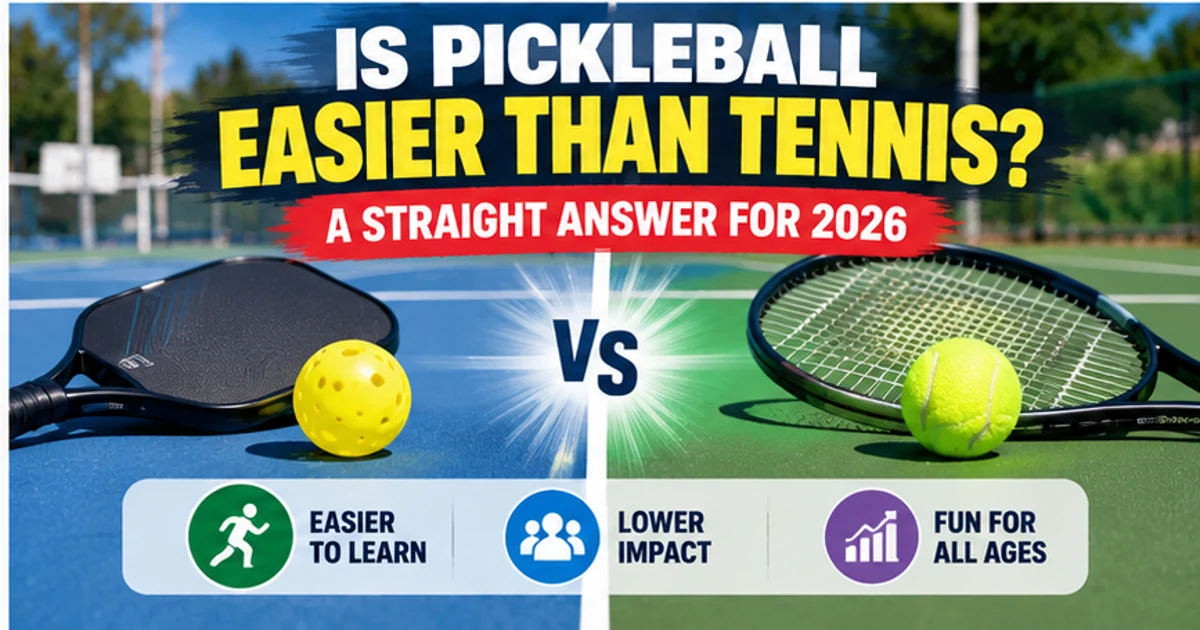
Is pickleball easier than tennis? For most beginners, yes. The smaller court, lighter paddle, and underhand serve let new players rally within minutes—something that rarely happens on a tennis court. That said, “easier” isn’t one-size-fits-all, and in at least one area tennis actually has the edge.
The Short Answer: Easier to Start, Harder to Pin Down
Pickleball is generally easier to pick up than tennis. The court is smaller, the equipment is lighter, the serve is more forgiving, and the ball moves slower. First-timers can usually hit a few shots back on day one.
But pickleball’s rulebook—the kitchen, the double-bounce rule, serve rotation—trips up newcomers more than tennis rules typically do. “Easier” depends entirely on what you’re measuring.
Is Pickleball Easier Than Tennis? A Side-by-Side Look
| Factor | Pickleball | Tennis | Easier? |
| Court size | 44 ft × 20 ft | 78 ft × 36 ft | Pickleball |
| Equipment | Light solid paddle | Heavier strung racquet | Pickleball |
| Ball | Plastic, holed | Pressurized rubber | Pickleball |
| Serve | Underhand, below waist | Overhand from baseline | Pickleball |
| Scoring | To 11, win by 2 | Points, games, sets | Pickleball |
| Net height | 34 in. (center) | 42 in. | — |
| Physical impact | Short movements, lower impact | More running, higher intensity | Pickleball |
| Learning the rules | More to absorb | More intuitive | Tennis |
Where Pickleball Is Easier to Learn
Court Size and Movement
A pickleball court is 44 by 20 feet. As reported by The Washington Post, a pickleball court is roughly 40 percent the size of a regulation tennis court. That gap is felt immediately in your legs—pickleball demands shorter, quicker bursts rather than the full-court sprints tennis requires. For players easing back into activity or managing joint issues, the smaller footprint is the single biggest reason pickleball feels accessible.
One trade-off nobody mentions: A lot of pickleball play happens right at the kitchen line in a low crouch. Players with knee or lower-back issues sometimes find that sustained squat more taxing than expected. Less running, yes—but more time bent at the knees.
Equipment: Paddle vs. Racquet
Pickleball uses a solid paddle and a plastic ball with holes—similar to a wiffle ball. Tennis uses a strung racquet and a livelier pressurized ball. That springier combination gives tennis players more contact time, allowing for spin and shot placement. The pickleball pops off the paddle almost instantly—less variety, but also less force needed to return it. For beginners, that immediacy is forgiving rather than punishing.
On cost, pickleball gear is generally cheaper to get started with. The barrier to entry is lower both physically and financially.
Where Tennis Might Actually Be Easier
Pickleball’s Rules Are Surprisingly Complex
This is the part that surprises most people. The pickleball rulebook is arguably trickier to learn than tennis. Three rules in particular catch newcomers:
The Non-Volley Zone (“the Kitchen”): There is a seven-foot zone on each side of the net where you cannot volley—hitting the ball out of the air while standing inside it is a fault. New players forget this constantly, and tennis has no equivalent.
The Double-Bounce Rule: After the serve, the ball must bounce once on each side before either player can volley. It gives beginners a beat to react, but it is one more rule to absorb.
Scoring Quirks: Pickleball goes to 11, win by 2, and you only score points on your own serve. Tennis uses points, games, sets, and matches—a system with a longer learning curve on paper—but the “score only when serving” rule in pickleball trips people up more in practice than the tennis scoring system typically does.
Serving: Underhand vs. Overhand
Pickleball serves are struck underhand and diagonally, below the waist. Tennis serves come overhand from behind the baseline. The underhand motion is far less demanding—no ball toss, no overhead swing to coordinate. For beginners, this alone makes pickleball’s opening shot far more forgiving than tennis’s.
Physical Demands: Which Sport Is Harder on the Body?
Both sports offer real fitness benefits. They simply ask for different things.
Pickleball involves short, sharp movements, quick reflexes near the net, and moderate cardiovascular output. Lower equipment weight and a smaller court keep the physical impact manageable, which is why the sport draws a wide range of ages and fitness levels.
Tennis demands covering a larger court, generating real power, and sustaining higher-intensity bursts. It is the bigger cardiovascular challenge of the two. Tennis is also harder on the shoulders and elbows over time—according to Wikipedia, tennis elbow (lateral epicondylitis) is an overuse injury associated with racquet sports and affects roughly 1–3% of adults annually. Pickleball carries a lower injury risk, though lower does not mean none.
Can You Play Pickleball on a Tennis Court?
Yes, with a few adjustments. Lower the net to 34 inches at the center, mark a 20-by-44-foot court using tape or chalk, and designate the seven-foot kitchen zones on each side. The surface and ball bounce differ slightly from a dedicated pickleball court, but it works well enough—and this adaptability is a big reason pickleball spread as fast as it did.
Which Sport Is Right for You?
If you want something social, low-impact, and beginner-friendly, pickleball is the easier door to walk through. If you want a higher-intensity workout with deeper tactical variety and a longer path to mastery, tennis rewards the commitment. Neither sport is objectively better—they suit different goals and different bodies.
Conclusion
Is pickleball easier than tennis? To start playing, almost always yes. The smaller court, lighter paddle, underhand serve, and slower ball all tilt in the beginner’s favor. But the rulebook narrows that gap quickly. “Easier” depends entirely on what you are measuring and where you are in your athletic journey.
Frequently Asked Questions
Is pickleball easier to learn than tennis?
Generally, yes. The smaller court, lighter paddle, underhand serve, and slower ball let beginners rally within minutes. That said, pickleball’s rules—particularly the kitchen and the double-bounce rule—take longer to fully internalize than most beginners expect.
How does the equipment differ between the two sports?
Pickleball uses a solid paddle and a plastic ball with holes. Tennis uses a strung racquet and a bouncier, pressurized ball that allows for more spin and power. Pickleball gear is typically cheaper and easier to handle for newcomers.
What are the physical differences between pickleball and tennis?
Pickleball involves short, quick movements and lower overall impact. Tennis demands more running, power, and endurance, making it the higher-intensity workout of the two. Pickleball is generally easier on the joints.
Can I play pickleball on a tennis court?
Yes. Lower the net to 34 inches at the center, mark a 20-by-44-foot court including the kitchen zones, and you are ready to play. The bounce may differ slightly from a dedicated court, but the setup works fine.
Which sport is right for me?
Choose pickleball for a social, low-impact, beginner-friendly experience. Choose tennis if you want a tougher physical workout and a deeper strategic challenge. Both sports are excellent—they simply suit different goals.

James Carter
ContributorMore from More Sports
How Many Players on a Hockey Team? Roster and Ice Numbers Explained
A hockey team normally has six players on the ice at one time: five skaters and one goaltender. In the…
How Long Is a Hockey Game? Periods, Breaks and Overtime
A standard ice hockey game has 60 minutes of regulation playing time, divided into three 20-minute periods. In real time,…
The Complete Guide to What to Wear for Pickleball
If you’re wondering what to wear to play pickleball, the short answer is: a moisture-wicking top, athletic shorts or leggings,…