How Long Is a Hockey Game? Periods, Breaks and Overtime

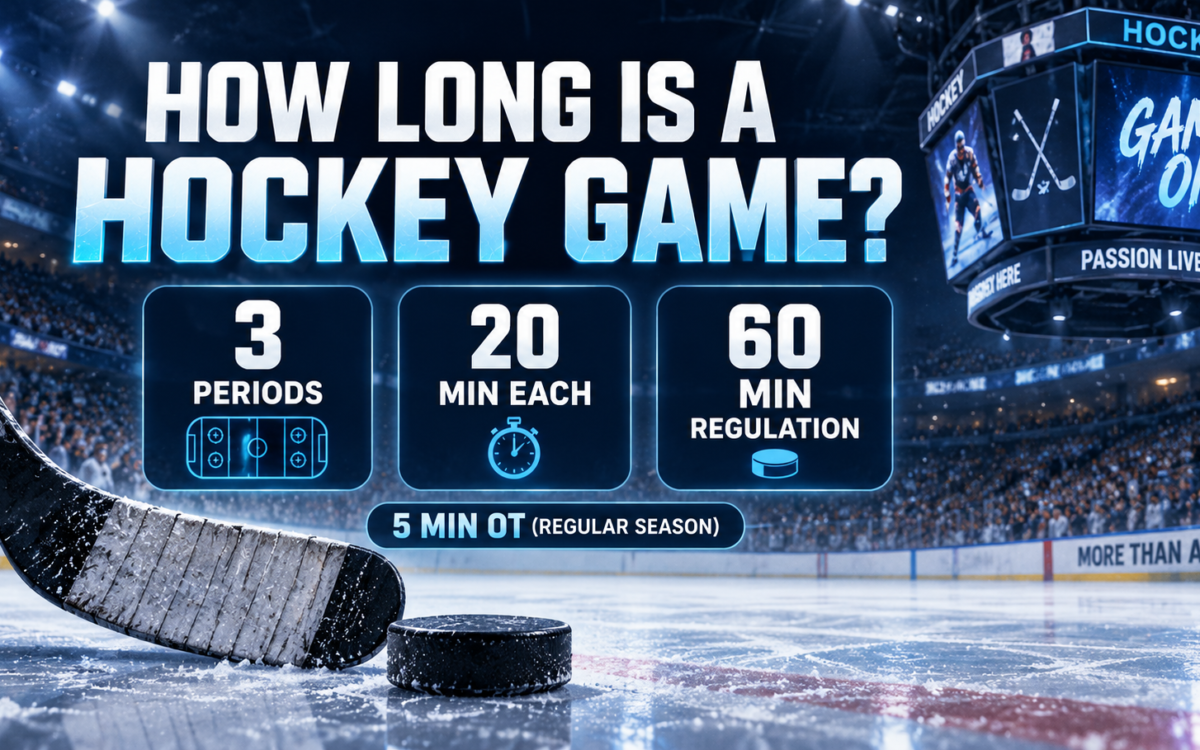
A standard ice hockey game has 60 minutes of regulation playing time, divided into three 20-minute periods. In real time, an NHL game usually takes about 2 to 2.5 hours because the clock stops frequently and there are two intermissions. Overtime, shootouts, penalties, reviews, and other stoppages can make the total time longer.
How long is a hockey game?
For most professional and international ice hockey, regulation lasts exactly 60 minutes. The game is split into three periods of 20 minutes each, according to Wikipedia. IIHF competition follows the same three-period structure.
| Part of game | Playing time |
| First period | 20 minutes |
| Second period | 20 minutes |
| Third period | 20 minutes |
| Regulation total | 60 minutes |
| NHL regular-season overtime | Up to 5 minutes |
| NHL playoff overtime | 20-minute periods until a goal |
The important difference is playing time versus elapsed time. The game clock only counts active game time. Stops for penalties, goals, offsides, icing, puck freezes, reviews, and other whistles do not reduce the 60 minutes of regulation.
How long does an NHL game take?
An NHL game is best planned as roughly a 2.5-hour event, even though regulation contains only one hour of game-clock time.
An NHL statistical update from 2019 reported an overall average game duration of 2 hours and 30 minutes at that point in the season. Exact real-world duration varies from game to game, so 2.5 hours works better as a planning estimate than as a fixed rule.
Several things add time:
- Two intermissions
- TV timeouts
- Penalties and resulting stoppages
- Goals and celebrations
- Icing and offside calls
- Video reviews
- Injuries or equipment problems
- Overtime and shootouts
NHL arena guidance from the Calgary Flames lists 18-minute intermissions and three separate two-minute TV timeouts during each period. Those scheduled breaks alone explain why 60 minutes of hockey takes considerably longer to watch.
How long are hockey intermissions?
NHL intermissions are 18 minutes long, with one break between the first and second periods and another between the second and third periods.
That adds 36 minutes before counting any stoppages during play.
International formats can use similar breaks. For example, the IIHF’s 2026 Olympic women’s tournament information specifies three 20-minute periods with an 18-minute intermission between periods.
Intermissions give players time to recover while teams make tactical adjustments and the ice is resurfaced.
How long is hockey overtime?
Overtime length depends on the competition and whether the game is in the regular season or playoffs.
In the NHL regular season, a tied game goes to a five-minute sudden-death overtime period, as reported by The Guardian. NHL overtime is played three-on-three, excluding goaltenders. If neither team scores, the game moves to a shootout.
International tournament rules can also use five-minute overtime followed by a shootout. The format can change by tournament stage, so the specific competition rules matter.
NCAA regular-season hockey also uses five-minute three-on-three overtime. NCAA rule decisions announced in 2026 allow conference policy to determine whether a shootout follows a tie after overtime.
How long are NHL playoff games?
NHL playoff games have no shootout, so there is no fixed maximum game length.
If a Stanley Cup Playoff game is tied after regulation, teams play full 20-minute sudden-death overtime periods. The game ends as soon as one team scores. If the first overtime ends scoreless, another 20-minute overtime follows.
This can make playoff games much longer than regular-season games. Game 2 of the 2025 Stanley Cup Final, for example, reached double overtime before Florida scored 8:05 into the second extra period.
Because playoff overtime can continue indefinitely, spectators should allow extra time when attending or watching an elimination-round game.
How long is youth hockey?
Youth hockey games are often shorter than professional games, and period length varies by age group and league.
USA Hockey rules accommodate different period lengths. Its penalty-time guidance, for example, distinguishes games using periods of 12 minutes or less, 12 to 17 minutes, and 17 minutes or longer. That shows why there is no single universal youth game duration.
Local leagues and tournaments may also impose time limits to keep rink schedules on track. Parents and players should check the rules for their specific league rather than assuming the NHL’s 20-minute periods apply.
Hockey game length FAQs
How many periods are in hockey?
A standard ice hockey game has three periods. Professional and major international games normally use 20-minute periods for 60 total minutes of regulation play.
How long is each hockey period?
Each regulation period in the NHL is 20 minutes. The clock stops when play stops, so a 20-minute period takes longer than 20 minutes in real time.
Why do hockey games take longer?
Hockey games take longer because the clock stops for whistles and scheduled breaks are added between periods. Intermissions, TV timeouts, penalties, reviews, injuries, and overtime can all increase elapsed time.
Can a hockey game end tied?
An NHL game cannot end in a tie under the current regular-season format. A tied regulation game goes to five-minute overtime and, if necessary, a shootout. Stanley Cup Playoff games instead continue through sudden-death overtime periods until someone scores.
Conclusion
So, how long is a hockey game? Regulation is 60 minutes, but an NHL game generally requires about 2 to 2.5 hours of real time. Overtime, stoppages, and playoff rules can extend it considerably.

James Carter
ContributorMore from More Sports
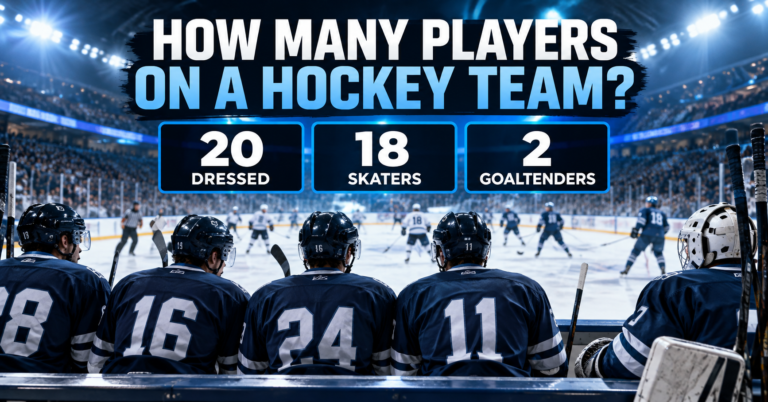
How Many Players on a Hockey Team? Roster and Ice Numbers Explained
A hockey team normally has six players on the ice at one time: five skaters and one goaltender. In the…

The Complete Guide to What to Wear for Pickleball
If you’re wondering what to wear to play pickleball, the short answer is: a moisture-wicking top, athletic shorts or leggings,…

Is Pickleball Good Exercise? Benefits, Calories and Fitness
Yes, pickleball is good exercise. A typical game raises your heart rate, keeps you moving, challenges balance and coordination, and…