Dink Pickleball Meaning: What a Dink Really Is

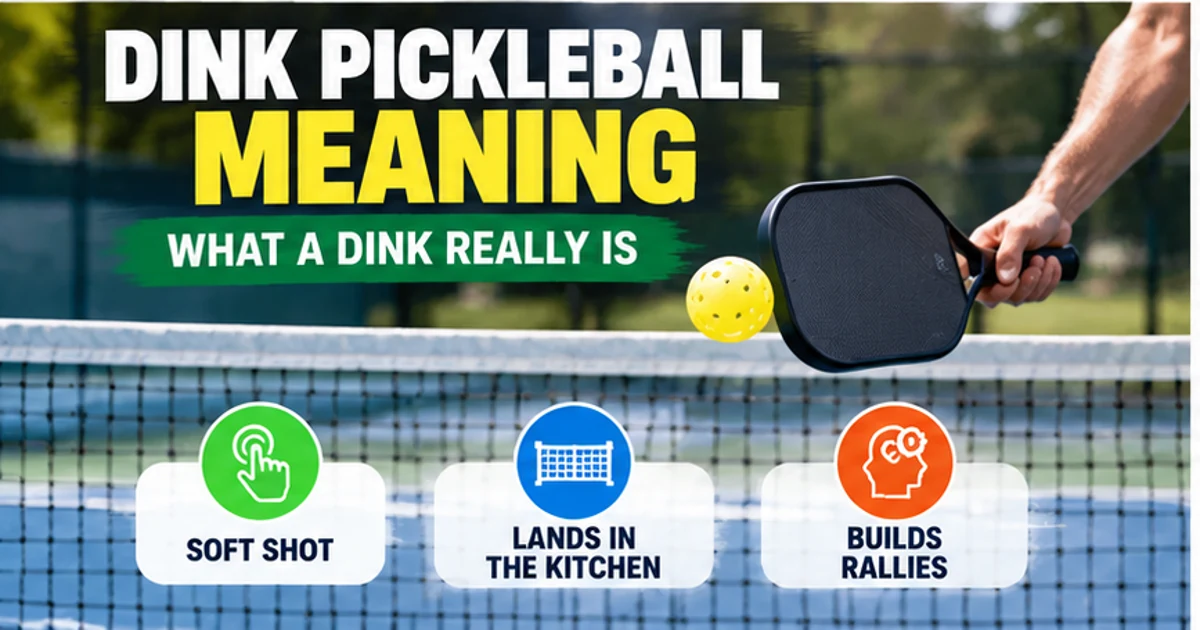
A dink in pickleball is a soft, controlled shot hit from near the kitchen line that lands in your opponent’s non-volley zone. Because they can’t volley from inside the kitchen, they’re forced to let the ball bounce and return it gently — making a well-placed dink nearly unattackable. That’s exactly why it’s one of the most important shots in the game.
What Is a Dink in Pickleball?
A dink is a low-pace shot played at or near the kitchen line, aimed to drop softly into the opposing non-volley zone. Since your opponent must let it bounce before returning, they can’t attack it with power — and that’s the whole point.
Most players don’t appreciate how much precision this takes until they’ve lost a few rallies trying to muscle it too hard.
Why the Kitchen (Non-Volley Zone) Makes Dinking Work
The kitchen extends 7 feet from the net on each side, sideline to sideline, according to Wikipedia. Players cannot volley — hit the ball in the air — while standing inside it. That single rule is the entire reason dinking exists. A ball that lands in your opponent’s kitchen forces patience, not aggression.
Is a Dink Offensive or Defensive?
Coaches genuinely disagree here, and it’s worth being upfront about that.
Some treat the dink as purely a setup tool — a way to move your opponent’s feet until a gap appears. Others describe it as both: offensive when you’re targeting a weak side, and defensive when you need to slow a fast rally and reset control.
In practice, these aren’t contradictory. The function depends on the moment. Players who drill dinks consistently report using it most often as a reset under pressure from hard hitters — but it does double duty as an attacking weapon once you learn to aim it.
Dink Pickleball Meaning in Match Play
Understanding the dink pickleball meaning goes beyond the definition. In real rallies, the dink is what separates patient, controlled players from those who force unforced errors by hitting too hard too early. If you’re rushing to attack from the kitchen line, a well-placed dink from your opponent will win the point while you’re still recovering.
How to Hit a Dink
The consensus across coaches is consistent: less is more.
- Get low. Bend your knees, keep your body down, and hold the paddle out in front.
- Loosen your grip. Aim for roughly 2 out of 10 on grip pressure. Tight hands overhit.
- Angle the paddle face upward to lift the ball just over the net.
- Skip the backswing. Use a short, compact motion driven by the wrist and forearm — not a full swing.
- Lift with your legs, then return to your ready position immediately after.
What often gets overlooked is footwork. If your feet drift or you stay planted in one spot, your placement collapses and you expose the middle of the court.
Common Dinking Mistakes to Avoid
- Hitting too hard (the most common error at every skill level)
- Standing upright instead of bending down to the ball
- Aiming at your opponent’s body — it doesn’t move them
- Hitting the same spot repeatedly, letting them settle into a groove
Where to Place Your Dinks
Placement beats power every time when dinking. The key targets:
- Near the NVZ line — a ball that lands close to the line forces a difficult low return
- Into the corners — makes your opponent reach and limits their angles
- Varied spots — advanced players rarely hit the same location more than two or three times in a row
Aiming straight at someone feels tempting but doesn’t force movement. Place the ball where they aren’t.
The Cross-Court Dink
A cross-court dink travels diagonally across the net. It accomplishes two things simultaneously: it pulls your opponent wide toward the sideline, and it passes over the lowest point of the net — which naturally reduces your error rate. It’s a quietly effective angle that most players underuse, especially at intermediate levels.
Dink vs. Drop Shot: Key Differences
These two shots get confused constantly. They’re related but serve different purposes.
| Feature | Dink | Drop Shot (Third-Shot Drop) |
| Where you hit it from | At or near the kitchen line | Mid-court or the baseline |
| Goal | Keep a soft, unattackable rally going | Land softly so you can advance to the line |
| Typical moment | During kitchen-line exchanges | After the serve and return (third shot) |
| Distance traveled | Short | Longer, arcing into the kitchen |
The drop shot gets you to the kitchen line. The dink is what you do once you’re there.
When to Use a Dink
A dink fits more moments than most players expect:
- When returning a dink — instead of trying to force an aggressive reply
- On the third shot — often played as a soft drop into the kitchen to advance
- Inside the kitchen when forced to let the ball bounce — keep it controlled
- Against a power player — slowing the rally neutralizes their biggest weapon, a tactic that’s become central to competitive play as reported by The Washington Post
Conclusion
A dink is a soft, controlled shot into the opponent’s kitchen, designed to be hard to attack. Its value comes entirely from placement and patience, not power. Once you understand the dink pickleball meaning in practice — not just in theory — your net game will improve faster than almost any other skill you develop.
Frequently Asked Questions
What is the dink pickleball meaning in simple terms?
A dink is a soft, low shot hit from near the kitchen line that lands in your opponent’s non-volley zone. Because they can’t volley from inside the kitchen, they must let it bounce — making it nearly impossible to attack cleanly.
What’s the difference between a dink and a drop shot?
A dink is hit at the kitchen line during a rally to keep the exchange soft. A drop shot travels farther — usually from mid-court or the baseline — to let you advance to the net. Different distances, different purposes.
How do you hold the paddle when dinking?
Use a very loose grip, often described as 2 out of 10 in pressure. A relaxed hold prevents overhitting and gives you the soft, controlled contact a dink requires. Tight grips are the most common reason dinks go long.
Is a dink offensive or defensive?
It can be both. Use it offensively to pressure a weak side or pull an opponent wide. Use it defensively to reset a fast rally and regain control. The situation determines which role it plays.
Where should a dink land?
Aim for the opponent’s non-volley zone, close to the kitchen line and toward the corners. That forces them to reach for a low ball, making a clean attacking return much harder.

James Carter
ContributorMore from More Sports

How Many Players on a Hockey Team? Roster and Ice Numbers Explained
A hockey team normally has six players on the ice at one time: five skaters and one goaltender. In the…
How Long Is a Hockey Game? Periods, Breaks and Overtime
A standard ice hockey game has 60 minutes of regulation playing time, divided into three 20-minute periods. In real time,…
The Complete Guide to What to Wear for Pickleball
If you’re wondering what to wear to play pickleball, the short answer is: a moisture-wicking top, athletic shorts or leggings,…