When Is Soccer Season in High School? 2026–27 Guide

If you are wondering when is soccer season in high school, the answer depends on your state. High school soccer is most commonly played in the fall in the United States, but many states schedule it during winter or spring instead.
Boys and girls may also play in different seasons within the same state. Your state athletic association and school calendar provide the exact dates.
When is soccer season in high school?
High school soccer can take place in fall, winter, or spring, depending on where you live.
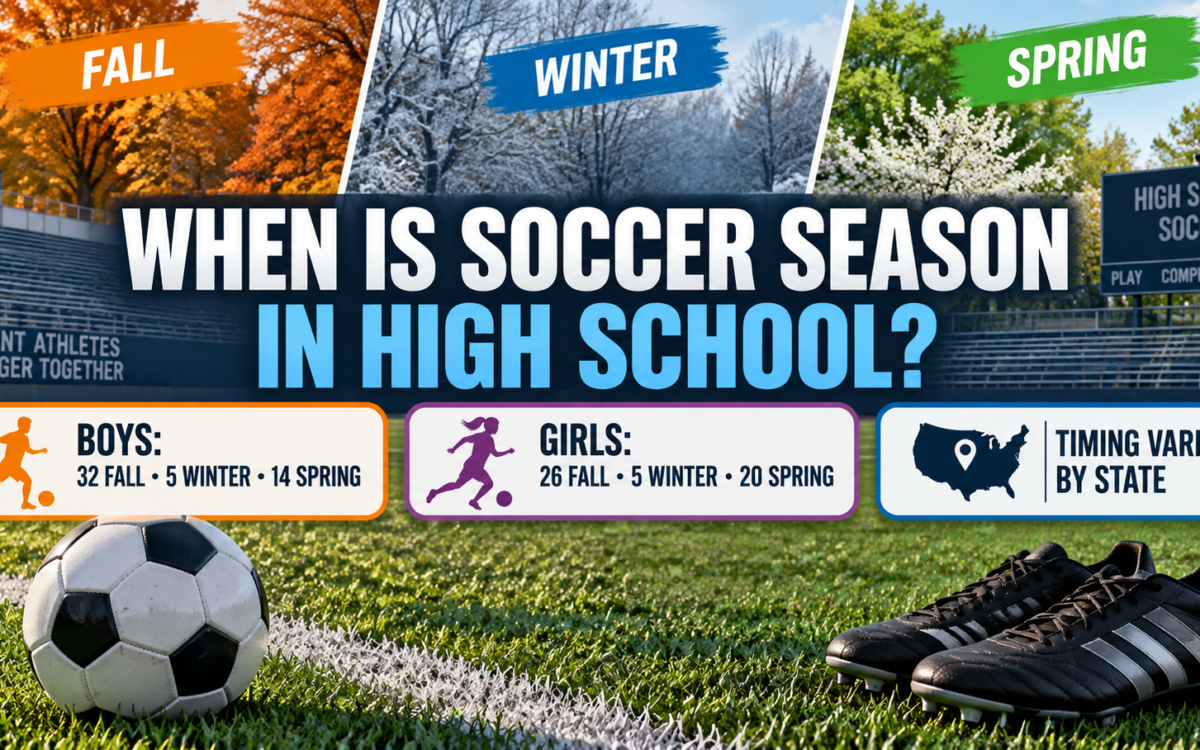
According to the National Federation of State High School Associations (NFHS), boys soccer is played in the fall in 32 states, spring in 14 states, and winter in five states. Girls soccer is played in the fall in 26 states, spring in 20 states, and winter in five states.
A typical breakdown looks like this:
| Soccer season | Typical months | Where it is common |
| Fall | August–November | Many northern and midwestern states |
| Winter | November–March | Some warmer-weather states |
| Spring | January–May | Several southern states |
| Postseason | Late season | District, regional, and state playoffs |
These dates are general ranges. State athletic associations set official practice, game, playoff, and championship dates.
Why does the soccer season vary?
Weather, school sports schedules, facilities, and state athletic association rules all affect when high school soccer is played.
In areas with cold and snowy winters, schools often place soccer in the fall. This gives teams more suitable outdoor playing conditions before winter weather arrives.
Warmer states have more flexibility. Some schedule soccer during winter or spring because outdoor fields remain usable during those months.
Scheduling also helps prevent conflicts between sports that need the same fields, coaches, or athletes. This is one reason a season that starts in August in one state might not begin until January or February somewhere else.
What months is high school soccer?
For many fall-season programs, practices can begin in late summer, followed by regular-season matches during August, September, and October. Playoffs may continue into October or November, as reported by Forbes.
Spring programs follow a much different calendar.
Georgia, for example, lists January 25 as the earliest soccer practice date and February 8 as the earliest match date for the 2026–27 school year. Its state tournament is scheduled to continue into May.
Texas provides another example. The UIL’s tentative 2026–27 schedule lists November 30 as the first practice date, December 28 as the first game date, and April 8–10 for the state finals.
This variation makes checking your own state’s calendar more accurate than relying on one national date.
Is high school soccer a fall sport?
Yes, high school soccer is a fall sport in many states, but that is not a nationwide rule.
NFHS data shows fall is the most common season for boys soccer and also the largest single season category for girls soccer. Still, a significant number of states hold soccer during spring or winter.
A player moving to another state should therefore check the new school’s schedule rather than assuming the season will stay the same.
The difference can also matter for athletes who play club soccer. Club and school calendars may overlap, so players should check both schedules before committing to tournaments, camps, or other activities.
How long is high school soccer season?
A high school soccer season typically lasts several months from the start of practice through the final postseason matches, according to The Guardian.
The exact length depends on state rules and how far a team advances in the playoffs. A team eliminated at the end of its regular season will finish earlier than one that reaches a regional or state championship.
The season normally includes:
- Preseason practices and tryouts
- Scrimmages or preseason matches
- Regular-season games
- District or regional competition
- State playoffs
- State championship matches
Players may also attend offseason conditioning, open-field sessions, camps, or strength training. Those activities are separate from the official competitive season and may have their own state or school rules.
When do high school soccer tryouts start?
Tryouts usually take place shortly before or at the beginning of the official practice period.
For fall soccer, that can mean late summer before classes begin or during the first weeks of school. Winter and spring teams generally hold tryouts later in the school year.
Players should contact their school’s athletic department or soccer coach early. Requirements may include a sports physical, registration forms, academic eligibility, insurance information, and other school paperwork before an athlete can participate.
Waiting until the first day of tryouts may leave too little time to complete these requirements.
High school soccer season FAQs
Does high school soccer start in August?
High school soccer starts around August in many states that classify it as a fall sport. Exact practice and competition dates are set by each state’s high school athletic association.
Is high school soccer played in spring?
Yes, high school soccer is played in spring in many states. NFHS reports that 14 states offer boys soccer in spring and 20 states offer girls soccer in spring.
Are boys and girls soccer in the same season?
Not always. Boys and girls soccer schedules can differ by state, so one may be played during a different part of the school year from the other.
How do I find my school’s soccer season dates?
Check your high school’s athletic website or your state’s interscholastic athletic association calendar. These sources provide the official practice, match, playoff, and championship dates for your area.
Conclusion
So, when is soccer season in high school? It may run in fall, winter, or spring based on state rules. Check your state association and school schedule for exact tryout, regular-season, and playoff dates.

James Carter
ContributorMore from Soccer

What Is a Striker in Soccer? Role and Skills Explained
A striker in soccer is an attacking player whose main job is to score goals. Strikers usually play closest to…
What Size Soccer Ball for 5 Year Old? Size Guide for Parents
If you’re wondering what size soccer ball for 5 year old players is right, choose a Size 3 soccer ball.…

What Size Soccer Ball for 10 Year Old? Size Guide
If you are wondering what size soccer ball for 10 year old players is right, choose a Size 4 soccer…