How to Keep Score in Pickleball: Simple Beginner Guide

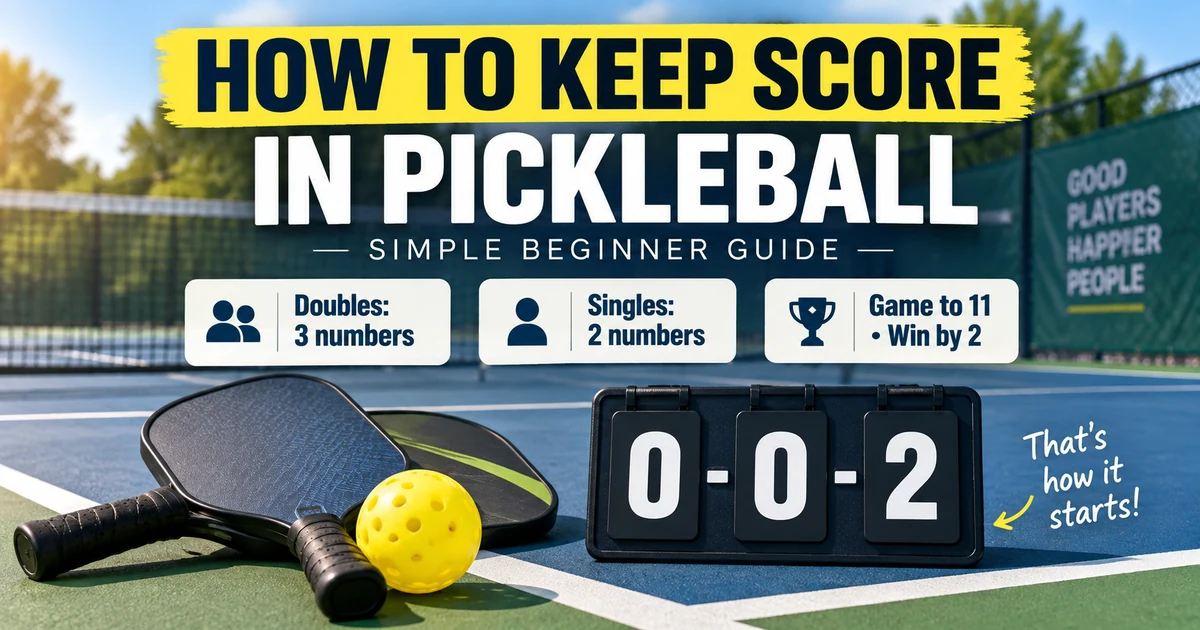
Learning how to keep score in pickleball is easier once you understand the serving order. In traditional side-out scoring, only the serving player or team can score a point. Doubles uses three numbers when calling the score, while singles uses two. Most recreational games are played to 11 points and must be won by two.
How to keep score in pickleball
The standard pickleball scoring system is called side-out scoring. When the serving team wins a rally, it scores one point. When the receiving team wins the rally, it normally gains the serve rather than a point. This traditional format, where games are played to 11 and only the serving side scores, is also described as reported by The Guardian.
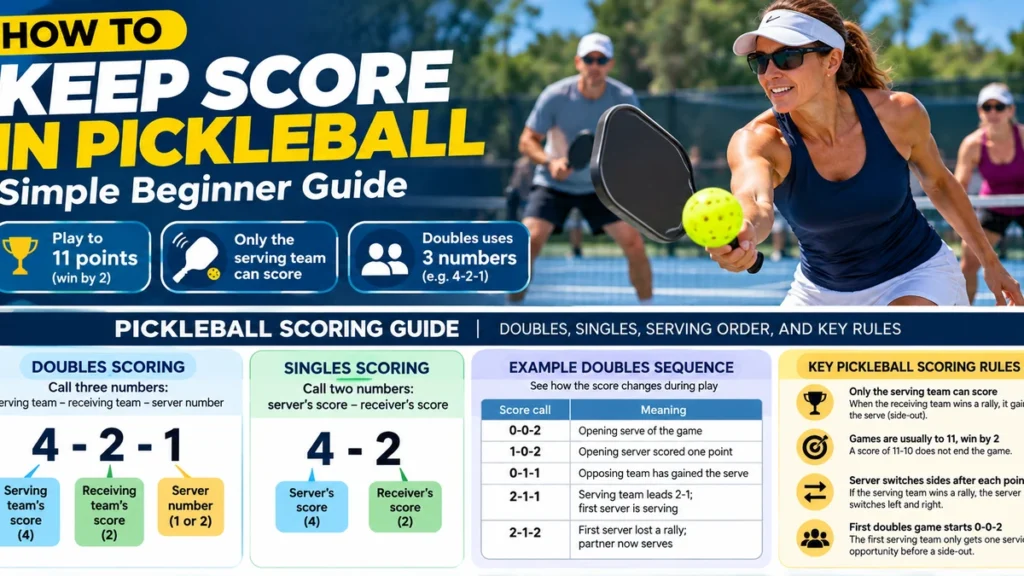
In doubles, call three numbers before each serve:
Serving team’s score – receiving team’s score – server number
For example:
4-2-1
This means:
- The serving team has 4 points.
- The receiving team has 2 points.
- The team’s first server is serving.
In singles, there is no server number, so a score such as 4-2 means the server has four points and the receiver has two.
Why does doubles start 0-0-2?
A doubles game begins with the score 0-0-2, even though the player serving is the team’s first actual server.
The unusual call exists because the team that serves first at the beginning of a game receives only one service opportunity before a side-out. The three-part doubles score and the opening 0-0-2 call are documented according to Wikipedia.
For example:
- Team A begins at 0-0-2.
- Team A wins the rally and leads 1-0-2.
- The same server switches sides and serves again.
- If Team A loses a rally, the serve immediately goes to Team B.
- Team B then gets both normal serving opportunities.
After that opening sequence, each doubles team normally has two servers before a side-out.
How doubles scoring works
Once a team gains the serve after a side-out, the player positioned on the right serves first.
If the serving team wins the rally:
- It receives one point.
- The server switches from right to left or left to right.
- The same player serves again.
If the first server loses a rally, the team’s score stays the same and the partner becomes server 2. If server 2 loses a rally, a side-out occurs and the opponents receive the serve.
Consider this example:
| Score call | Meaning |
| 0-0-2 | Opening serve of the game |
| 1-0-2 | Opening server scored one point |
| 0-1-1 | Opposing team has gained the serve |
| 2-1-1 | Serving team leads 2-1; first server is serving |
| 2-1-2 | First server lost a rally; partner now serves |
The third number does not permanently identify one player as server 1 or server 2. It identifies which serving opportunity the team is using during its current turn.
Remember odd and even positions
Court position is one of the easiest ways to check whether you have remembered the score correctly.
In doubles, note which player starts on the right side for each team. When that player’s team score is even, that player should be on the right. When the team’s score is odd, that player should be on the left.
For example:
- Score 0: starting player is on the right.
- Score 1: starting player is on the left.
- Score 2: starting player is back on the right.
- Score 3: starting player is on the left.
This odd-even method is especially useful after a long rally or when players forget who should serve.
How singles scoring works
Singles scoring removes the third number because there is only one player on each side.
The score is called:
Server’s score – receiver’s score
The server’s score also determines where the serve begins:
- Even score: serve from the right court.
- Odd score: serve from the left court.
If the server wins the rally, the server scores and switches sides. If the server loses the rally, the opponent takes over the serve without a point being awarded under traditional side-out scoring.
How many points win pickleball?
A common pickleball game is played to 11 points, win by two. That means a score of 11-10 does not end the game. Play continues until one player or team leads by at least two points.
Some tournament formats can also use games to 15 or 21 points. Players entering organized competition should check the event rules before play begins.
What about rally scoring?
Rally scoring is different because a point can be awarded after every rally, regardless of which side served.
Some organized pickleball formats may use rally-scoring variations instead of traditional side-out scoring. Because scoring formats can differ between events, players should check the tournament’s published rules before competing.
Pickleball scoring FAQs
Do you have to say the score before serving?
Yes. The server should clearly call the complete score before serving so everyone knows the score and serving sequence.
In doubles, that means stating the serving team’s score, the receiving team’s score, and the server number. In singles, only the two players’ scores are called.
Can the receiving team score a point?
Not under traditional side-out scoring. Only the serving side scores when it wins a rally.
If the receiving team wins the rally, it gains a serving advantage rather than adding a point to its score.
What does the third number mean?
The third number tells you whether server 1 or server 2 is serving during the team’s current service turn. It is used in doubles but not singles.
The number refers to the team’s current serving sequence, not to a permanent player designation.
Why do pickleball players switch sides?
The serving team’s players switch left and right each time they score. Keeping track of those positions also helps players reconstruct the correct score if they forget it.
Remembering whether the starting player should be on the odd or even side is a useful way to identify scoring mistakes.
Conclusion
Once you understand serving order, how to keep score in pickleball becomes straightforward. Remember server score first, opponent score second, and server number third in doubles, then use odd-even court positions whenever you need to check yourself.

James Carter
ContributorMore from Uncategorized
When Was Pickleball Invented? The 1965 Origin Story
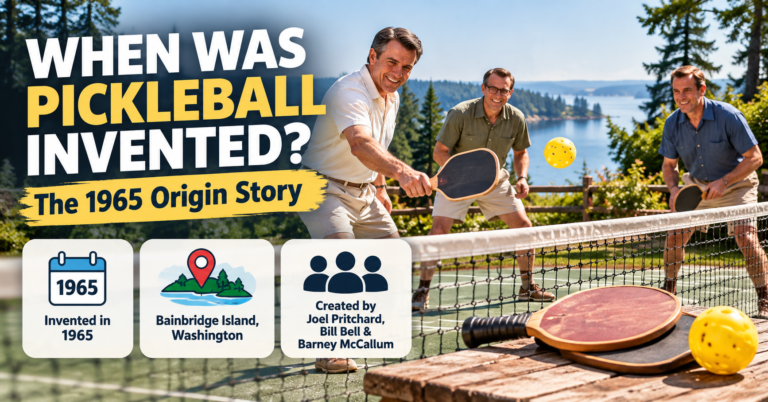
Pickleball was invented in 1965 on Bainbridge Island, Washington, near Seattle, according to The Washington Post. The sport was created…
Skinny Singles Pickleball: Rules, Scoring, and How to Play
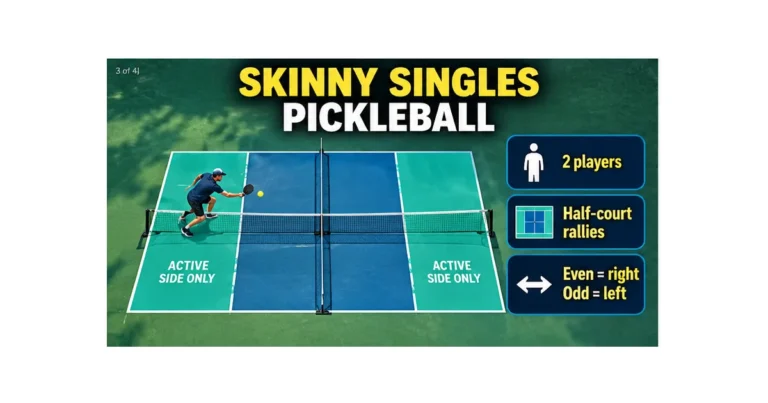
Skinny singles pickleball is a one-on-one version of pickleball where each player uses only half of the court during a…
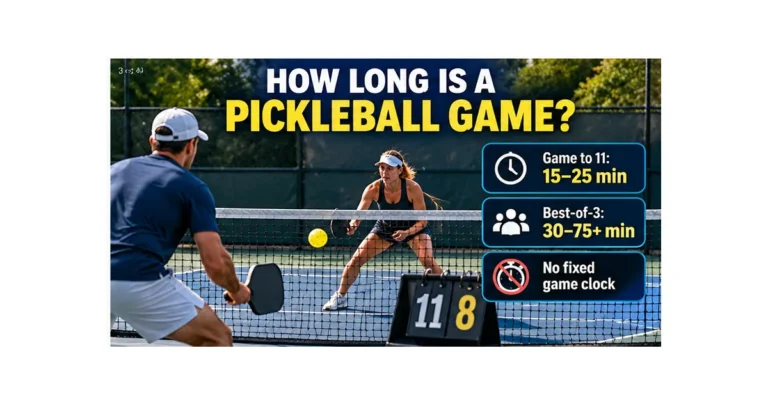
How Long Is a Pickleball Game? Average Game and Match Times
A pickleball game usually lasts 15 to 25 minutes when played to the standard 11 points. There is no fixed…