What’s a Double Double in Basketball? Explained Briefly


A double-double in basketball happens when a player reaches double figures — 10 or more — in two of the five main statistical categories during a single game. That’s the whole rule. Two categories, ten or more in each.
The Five Categories That Count in a Double Double
Only five stats are in play here: points, rebounds, assists, steals, and blocks. Hit 10+ in any two of them and you’ve got a double-double. The other three don’t factor in at all.
So a player could finish with zero steals and zero blocks and still record one easily. In practice, that’s exactly what happens most nights — the double-double comes from the two categories a player naturally fills up, and the rest are beside the point.
According to Wikipedia, the most common double-double combination is points and rebounds, followed by points and assists — with Tim Duncan holding the all-time NBA record of 841 career double-doubles since tracking began in 1983–84.
A Quick Example
Say a forward finishes a game with 14 points and 11 rebounds. Both numbers are in double figures. That’s a double-double. It doesn’t need to be points-and-rebounds though — 18 points and 10 assists counts just the same.
The Most Common Combinations in a Double Double
Most double-doubles fall into two buckets. Big men tend to rack up points and rebounds, since they’re playing close to the basket on both ends. Guards more often pair points with assists, because they handle the ball and set up scoring.
Steals and blocks are the outliers. Reaching double figures in either is extremely rare, so you’ll almost never see a double-double built on those stats. It happens — just not often.
Centers and power forwards account for the largest share of double-double performances in any given NBA season, reflecting their dual role in interior scoring and rebounding.
What’s a Double Double In Basketball vs. a Triple Double?
The same logic scales up. Reach double figures in three categories and it becomes a triple-double. Here’s how they compare:
| Term | Categories at 10+ | Typical Combination |
| Double-double | 2 of the 5 | Points + rebounds, or points + assists |
| Triple-double | 3 of the 5 | Points + rebounds + assists |
Nearly every triple-double is built from points, rebounds, and assists for the same reason the rare combos stay rare — those are the three stats a player can realistically pile up in a single night. Data from Wikipedia’s NBA career triple-double leaders confirms that Oscar Robertson, Russell Westbrook, and Nikola Jokić are the only players in NBA history to average a triple-double across an entire season.
How Rare Is a Double Double Involving Steals or Blocks?
Reaching 10 steals or 10 blocks in a single game is almost unheard of at any level of professional basketball. Even the league’s best defenders rarely approach those figures across a full game.
Conclusion
A double-double is simply 10+ in two of the five main stats: points, rebounds, assists, steals, or blocks. The two most common versions are points-rebounds and points-assists. Reach three categories and it’s a triple-double instead.
Frequently Asked Questions
Is a double double an individual or team stat?
It’s an individual stat — it tracks one player’s numbers in a single game, not a team total.
What’s a triple-double?
A triple-double is double figures (10+) in three of the five categories. Almost all of them combine points, rebounds, and assists.
Which combination is most common?
Points and rebounds, usually from big men. Guards more often combine points and assists.
Can a player get a double double with steals or blocks?
Yes, but it’s rare. Reaching 10+ steals or 10+ blocks in a single game almost never happens at the professional level.
Does it matter if a player scores zero in the other categories?
No. Only the two categories with 10+ matter. Zeros elsewhere don’t change anything.

James Carter
ContributorMore from Basketball
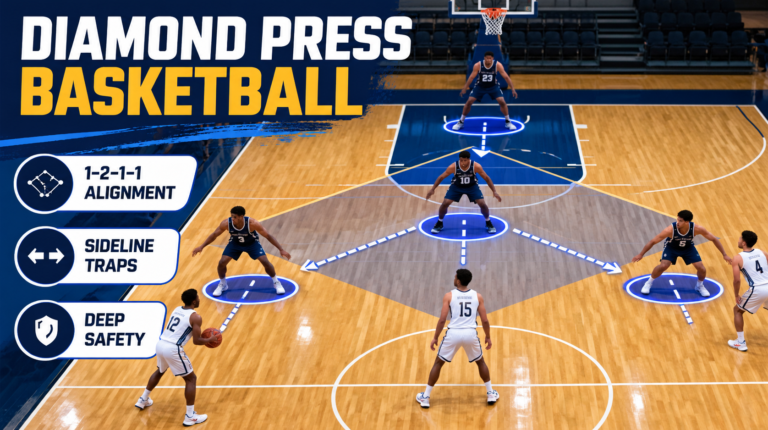
Diamond Press Basketball: How the 1-2-1-1 Press Works
Diamond press basketball is a full-court defensive strategy that uses a 1-2-1-1 alignment to pressure the inbound pass, trap the…
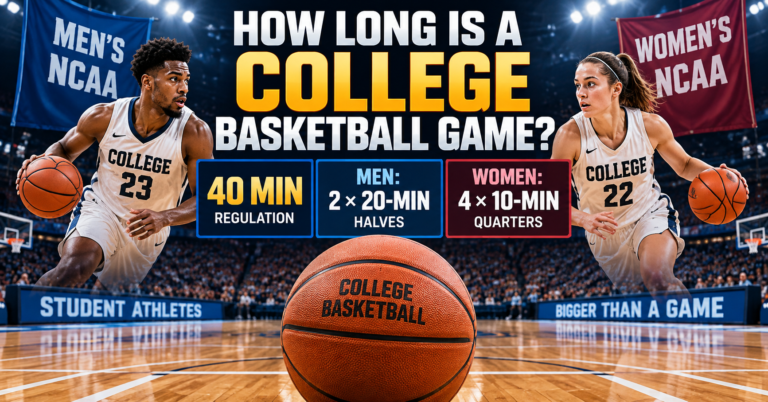
How Long Is a College Basketball Game? (2025-26 NCAA Rules)
How long is a college basketball game? Under 2025-26 NCAA rules, regulation remains 40 minutes: men play two 20-minute halves,…

When Is Basketball Season? NBA, College, High School & WNBA Dates
Basketball season usually runs from October or November through March or April, but the exact months depend on the league.…