Diamond Press Basketball: How the 1-2-1-1 Press Works

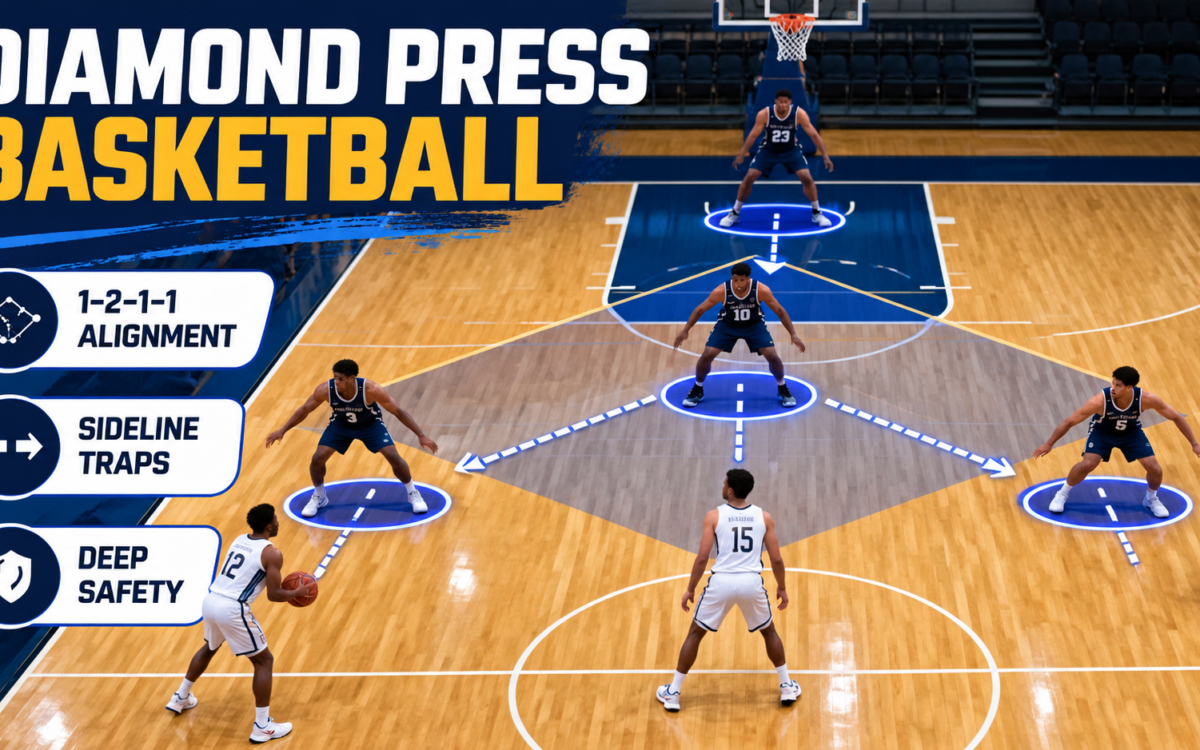
Diamond press basketball is a full-court defensive strategy that uses a 1-2-1-1 alignment to pressure the inbound pass, trap the first receiver, and force quick decisions, according to Wikipedia. The four front defenders form a diamond shape while the fifth defender protects the basket as the last line of defense. It is an aggressive press that can create turnovers but also leaves openings if the offense breaks the trap.
What is diamond press basketball?
The diamond press is commonly called the 1-2-1-1 press because of how the five defenders are positioned across the court.
The basic alignment includes:
- 1 defender pressuring the inbound area
- 2 defenders positioned across the next level
- 1 defender around the middle of the court
- 1 defender protecting the back of the press
These positions create the diamond appearance that gives the defense its name.
The goal is usually to direct the first pass toward a sideline and trap the receiver. By using the sideline as another boundary, two defenders can reduce the ball handler’s passing and dribbling options.
How the 1-2-1-1 press works
The diamond press begins as soon as the opposing team prepares to inbound the ball.
The defender at the top of the press pressures the inbound area and tries to influence where the ball goes. Once the offense completes a pass toward one side, the defense begins its rotations.
A typical sequence works like this:
- The offense makes the inbound pass toward a sideline.
- The nearest wing closes on the receiver.
- The top defender joins the wing to form a two-player trap.
- The weak-side wing rotates toward the middle to intercept passes.
- The middle defender reads the next available passing option.
- The deepest defender stays behind the press to protect the basket.
The exact rotations can vary by coaching system, but trapping along the sides is a common principle.
Diamond press player responsibilities
Each defender has a different job, and one missed rotation can give the offense an easy path through the press.
Top defender
The top player is often the most active defender. This player influences the inbound pass and then quickly joins the first trap.
Quickness, effort, and anticipation are valuable at this position.
Two wing defenders
The wing on the ball side becomes part of the trap. The opposite wing rotates toward the middle of the floor and looks for a possible interception.
These two responsibilities change depending on which side receives the inbound pass.
Middle defender
The middle player reads the offense behind the initial trap. This defender must anticipate passes and prevent the offense from easily advancing through the center of the court.
Back defender
The deepest defender is the safety. This player protects against long passes and must prevent the offense from turning a broken press into an uncontested scoring opportunity, as reported by The Guardian.
Where should the defense trap?
The sideline is usually the preferred trapping area because it limits where the ball handler can move.
Two defenders can surround the player while the boundary removes another escape route.
A good trap should:
- Arrive quickly
- Prevent a split between defenders
- Keep hands active
- Take away easy passing angles
- Avoid unnecessary fouls
The other three defenders cannot relax during the trap. They must rotate into passing lanes because a trap without proper coverage behind it can be beaten with one pass.
Why coaches use the diamond press
The biggest advantage of the diamond press is pressure.
It can force opponents to make decisions before they are comfortable, especially teams with inexperienced ball handlers or weak passing under pressure. It can also disrupt an opponent before the offense reaches its normal half-court sets.
Potential benefits include:
- Creating turnovers
- Forcing rushed passes
- Disrupting offensive rhythm
- Using the sidelines as trapping areas
- Increasing the pace of the game
The press can be particularly useful after a made basket or free throw because the defense has time to establish its alignment.
What are its weaknesses?
The aggressive nature of the diamond press creates risk.
If the offense passes around or over the first trap, there may be fewer defenders protecting the basket. A fast, experienced team can attack that temporary numerical advantage.
Common problems include:
- Giving up long passes
- Leaving the middle open
- Trapping too slowly
- Poor rotations behind the trap
- Allowing easy baskets after the press is broken
- Players gambling for steals instead of protecting passing lanes
For that reason, the diamond press works best when all five defenders understand their rotations rather than simply chasing the basketball.
Diamond press basketball FAQs
Is a diamond press a zone defense?
Yes. The 1-2-1-1 diamond press is generally taught as a full-court zone press in which defenders rotate according to the ball’s location and available passing areas rather than guarding one opponent everywhere on the court.
Why is it called a diamond press?
It is called a diamond press because the first four defenders form a diamond-like shape in the 1-2-1 alignment, with the fifth defender positioned deeper as the safety.
When should a team use a diamond press?
A team can use a diamond press when it wants to increase ball pressure, force quicker decisions, create turnovers, or change the pace of the game. It is especially useful when the defense has enough time to establish its formation after a dead ball or made free throw.
How do you beat a diamond press?
Quick, accurate passing and strong spacing can beat a diamond press. The offense should avoid holding the ball inside traps, use reliable ball handlers, look toward the middle, and attack open space once it gets past the first line of pressure.
Conclusion
Diamond press basketball uses an aggressive 1-2-1-1 alignment to create traps, disrupt passing lanes, and force hurried decisions. Its success depends on coordinated rotations, disciplined trapping, and a reliable safety defender protecting the basket.

James Carter
ContributorMore from Basketball
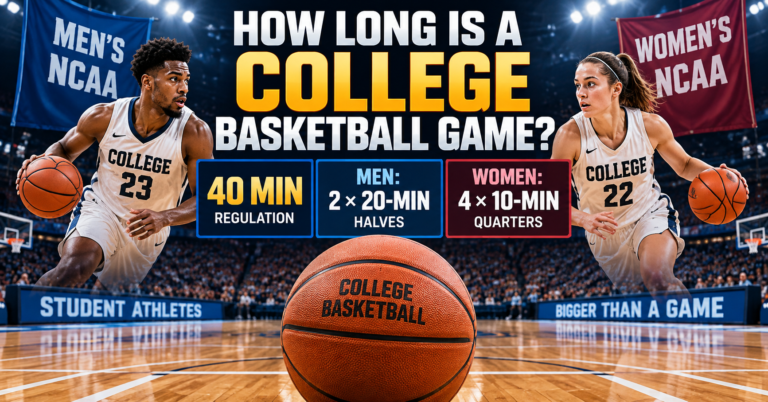
How Long Is a College Basketball Game? (2025-26 NCAA Rules)
How long is a college basketball game? Under 2025-26 NCAA rules, regulation remains 40 minutes: men play two 20-minute halves,…

When Is Basketball Season? NBA, College, High School & WNBA Dates
Basketball season usually runs from October or November through March or April, but the exact months depend on the league.…
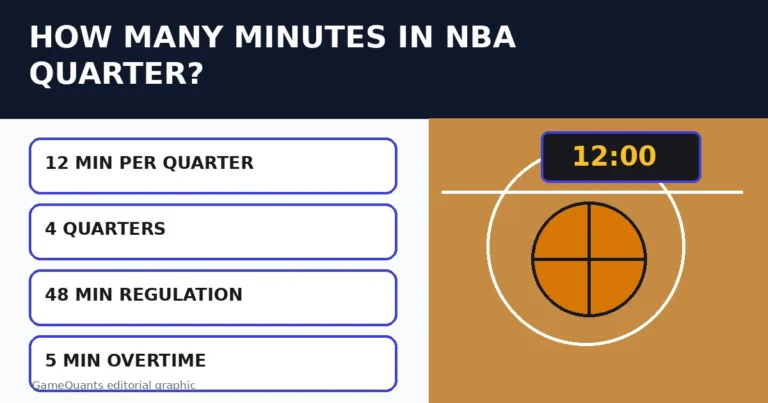
How Many Minutes in NBA Quarter? Complete Timing Guide
An NBA quarter is 12 minutes long. A regulation NBA game has four quarters, so there are 48 minutes of…