What Is a Screen in Basketball? A Clear Breakdown


A screen in basketball is a legal offensive move where one player uses their body to block a defender’s path, freeing a teammate to shoot, drive, or catch a pass. It’s also called a “pick” — same action, different word. Coaches at every level rely on screens because they create separation without requiring a turnover or trick play.
Screen vs. Pick — Are They Actually Different?
No. They’re two names for the same action. Coaches and commentators use them interchangeably, which trips up a lot of newcomers. If you hear “set a pick” or “set a screen,” it means the same thing.
In practice, older coaches tend to say pick, while newer instructional material leans on screen. Don’t overthink it.
What Is a Screen in Basketball and How Does It Work?
The idea is simple. One offensive player plants their body in the path of a defender. That defender now has to go around the screener to keep guarding their assignment — and that split-second delay is the entire point. It creates separation.
What’s often overlooked is the secondary benefit: once the defense scrambles to recover, the screener themselves frequently ends up open. Players who commit to setting good screens often score more than people expect, simply because defensive attention shifts to the teammate using the screen.
The Screener’s Role
The screener’s job isn’t glamorous, but it’s high-value. Their responsibilities:
- Get to the right position before the ball handler arrives
- Set their feet and hold a low, wide base
- Absorb contact without flinching or moving
- Read the defense after the screen to find their own opening
Experienced screeners know that doing this well — consistently, every possession — is one of the fastest ways to earn playing time at any level.
What Makes a Screen in Basketball Legal vs. Illegal?
This is where most confusion lives, and many explanations skip past it entirely.
Legal Screen Requirements
To set a legal screen, the screener must be stationary at the moment of contact. Feet planted, body upright, holding a strong base. If you’re set and the defender runs into you, that’s on them — no foul.
What Is a Moving Screen?
A moving screen is an illegal screen where the screener is still in motion when contact occurs. It results in an offensive foul and a turnover, as reported by the NBA Video Rulebook. Moving screens get called constantly at every level of the game. Most young players lose the ball this way before they learn to simply stop and hold their ground.
For a back screen specifically, the screener is generally expected to give the defender one step of room before contact.
On-Ball vs. Off-Ball Screens
On-Ball Screens
These are set for the teammate who currently has the ball. The ball screen is the classic example and one of the most reliable ways to create an offensive advantage. The defender guarding the ball handler must now navigate around another body.
Off-Ball Screens
These free up a teammate who doesn’t have the ball, usually so they can get open to receive a pass. They’re harder to spot during live play because the action happens away from where the ball — and most viewers — are focused.
Common Types of Screens in Basketball
There are many variations, but these four cover the majority of what you’ll see at any level:
| Screen Type | How It Works | Primary Purpose |
| Ball Screen | Set for the player holding the ball | Enable a drive or pull-up shot |
| Down Screen | Screener moves toward the baseline | Free a shooter cutting to the perimeter |
| Back Screen | Set behind a defender | Catch the defender unaware; send cutter to the basket |
| Away Screen | Passer moves away from ball to screen | Free a shooter on the weak side |
Ball Screen
Set for the player holding the ball, typically while the handler still has their dribble alive. The most common screen in the modern game.
Down Screen
The screener moves toward the baseline to free a teammate cutting up toward the perimeter. Common setup for getting shooters open on the wing or at the top of the key.
Back Screen
Set behind a defender, often catching them unaware so the cutter can slip toward the basket. Requires giving the defender a step of space to remain legal.
Away Screen
A player passes the ball, then immediately moves away from it to set a screen for someone else. Teams run this to free a shooter on the weak side while the defense is focused on the ball.
How Screens Are Used in Offense
Screens don’t happen randomly. They feed into specific actions, and two show up more than any others at every level of basketball.
Pick-and-Roll
The ball handler uses a screen, and the screener then rolls toward the basket to receive a pass for an easy finish. According to Wikipedia, the pick-and-roll has developed into the NBA’s most common offensive action, rising to prominence in the 1990s and never looking back.
Pick-and-Pop
Nearly identical setup — one key difference. Instead of rolling to the rim, the screener steps back, usually behind the three-point line, to catch and shoot. Most effective when the screener is a reliable perimeter shooter.
On-Ball vs. Off-Ball Screens at a Glance
| Category | Set For | Main Purpose | Example Types |
| On-ball screen | Player with the ball | Free the handler to drive or shoot | Ball screen, pick-and-roll, pick-and-pop |
| Off-ball screen | Player without the ball | Free a teammate to get open for a pass | Down screen, back screen, away screen |
Keys to Setting an Effective Screen
A few things separate a screen that works from one that gets ignored or called back:
- Create separation from your own defender before setting the screen
- Get the angle right — face the direction you want your teammate to go
- Make contact — a screen with no contact is just a suggestion
- Hold a strong, low base so you don’t get knocked off balance
- Hold it until the defender clears — moving early draws the whistle
The best screeners in basketball aren’t always the biggest players. They’re the ones who commit to doing it correctly on every possession.
Conclusion
A screen in basketball is a legal block that frees a teammate to score or receive a pass. Whether on-ball or off-ball, the mechanics stay the same: get set, make contact, and hold your ground without moving. Mastering the screen is one of the highest-leverage skills any team-first player can develop.
Frequently Asked Questions
Is a screen the same as a pick in basketball?
Yes. “Screen” and “pick” describe the same action — using your body to block a defender and free a teammate. Coaches use both terms interchangeably. Neither word implies a different technique or rule.
What is a moving screen in basketball?
A moving screen is an illegal screen where the screener is still in motion at the moment of contact. It results in an offensive foul and a turnover for the team setting the screen.
What is the difference between a screen and a box-out?
A screen frees a teammate on offense by blocking a defender’s path. A box-out is a rebounding technique where you use your body to keep an opponent away from a missed shot. Related in body positioning, but different goals and situations.
Can you set a screen on defense?
No — screens are an offensive action. The defensive equivalent of body positioning is boxing out for rebounds, which serves a different purpose and isn’t classified as a screen.
What is the most common type of screen in basketball?
The ball screen — especially within the pick-and-roll — is the most frequently used screening action across every level of basketball, from youth leagues through the NBA.

James Carter
ContributorMore from Basketball
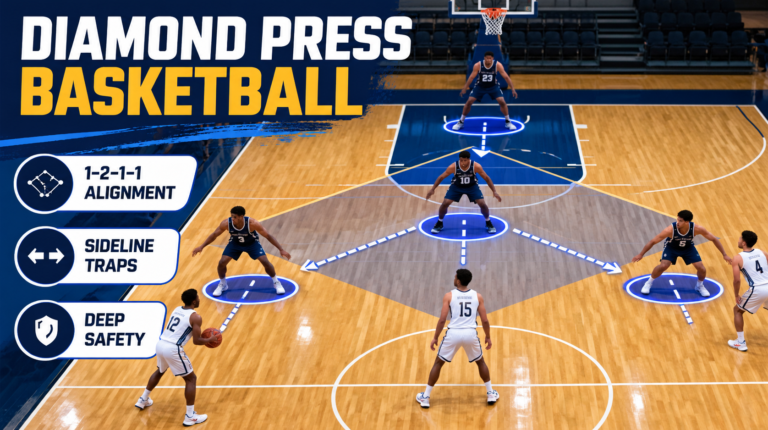
Diamond Press Basketball: How the 1-2-1-1 Press Works
Diamond press basketball is a full-court defensive strategy that uses a 1-2-1-1 alignment to pressure the inbound pass, trap the…
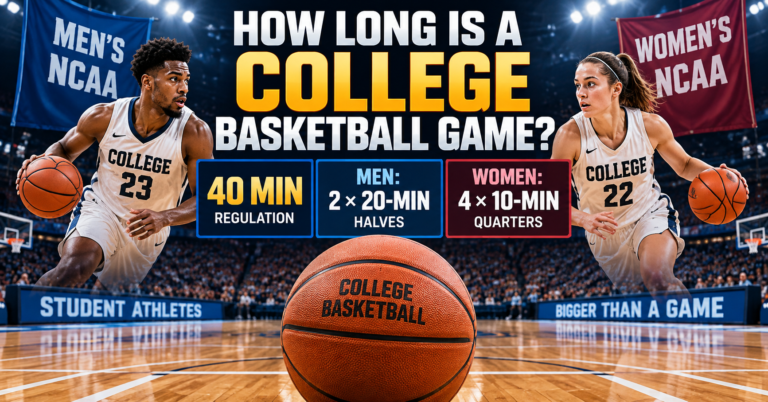
How Long Is a College Basketball Game? (2025-26 NCAA Rules)
How long is a college basketball game? Under 2025-26 NCAA rules, regulation remains 40 minutes: men play two 20-minute halves,…

When Is Basketball Season? NBA, College, High School & WNBA Dates
Basketball season usually runs from October or November through March or April, but the exact months depend on the league.…