How Much Does It Cost to Build a Pickleball Court?
Building an outdoor pickleball court costs $20,000 to $50,000, about $34,000 on average in 2026. See what drives the price and how to build one for less.

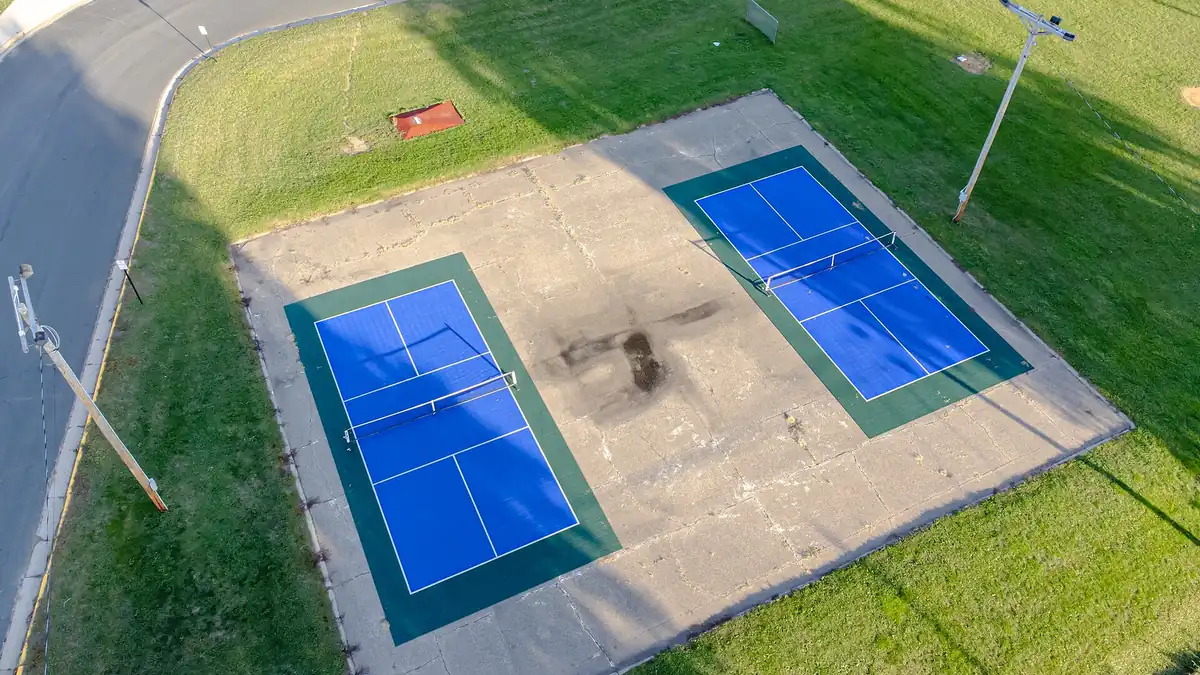
Building one outdoor pickleball court typically costs $20,000 to $50,000, with a 2026 national average of $34,000, according to Angi’s cost guide (updated October 28, 2026). Angi prices a single court at $15,000 to $35,000 on a standard 880 sq ft court, so budget toward the top of that range for the 30 × 60 ft minimum playing surface USA Pickleball sets. Reusing an existing slab costs far less: one Michigan city paid about $14,500 per court in 2026.
Where your number lands comes down to three things: whether you need a new base, how much fence and light you add, and whose labor rates you’re paying.
Key takeaways
What does it cost to build a pickleball court?
Most cost guides quote a number per court, but the footprint behind it matters as much as the number. The lines enclose 20 × 44 ft (880 sq ft), while Rule 3.A.3 of USA Pickleball’s 2026 rulebook sets a minimum playing surface of 30 × 60 ft (1,800 sq ft).
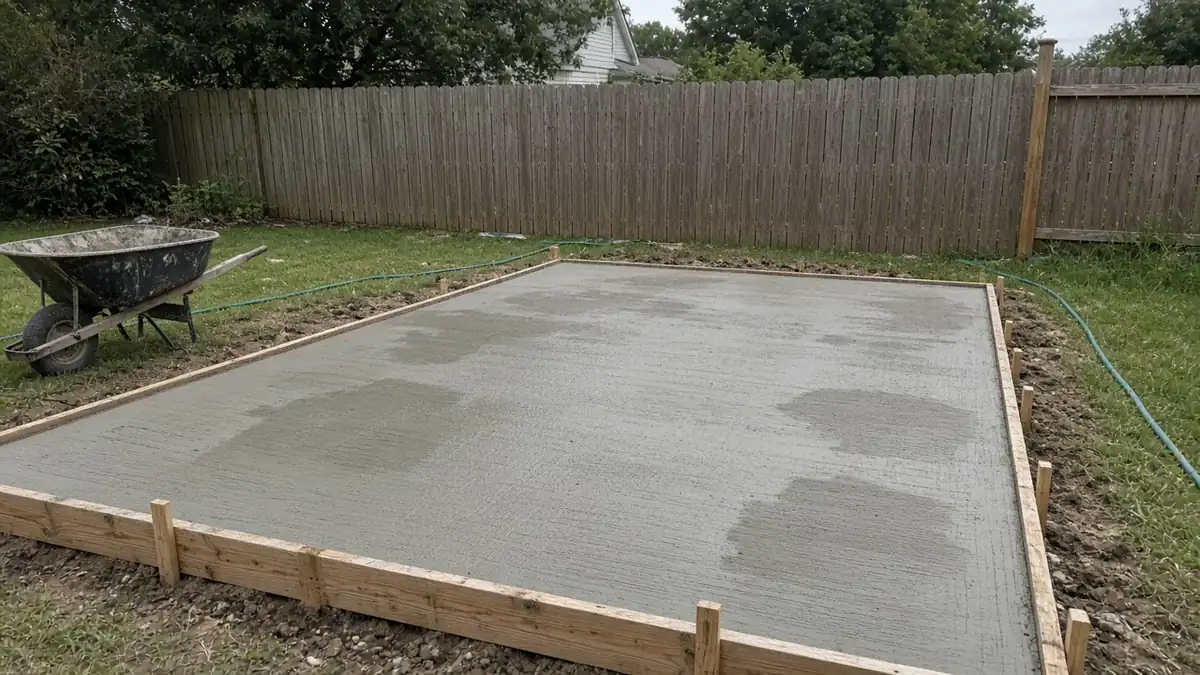
Angi’s cost guide prices that 880 sq ft court at $15,000 to $35,000. Here’s what happens if you stretch the same range over the footprints people actually build. The scaling is our math, not Angi’s:
| Footprint | Sq ft | Cost range | Basis |
|---|---|---|---|
| Court lines only (20 × 44) | 880 | $15,000 to $35,000 | Angi, Oct 2026 |
| USAP minimum (30 × 60) | 1,800 | $30,700 to $71,600 | Our area scaling (×2.05) |
| USAP new construction (34 × 64) | 2,176 | $37,100 to $86,500 | Our area scaling (×2.47) |
Straight area scaling overstates the bill, because nets, posts, permits and mobilization don’t grow with square footage. The real cost of a 30 × 60 ft build sits somewhere between the top of Angi’s single-court range and the scaled figures.
Our take: budget from $35,000 for a full-size court, then trim. A pad sized only to the painted lines saves money right up until the first lob sends someone into the fence.
Where the money goes
Angi’s updated guide breaks out these costs. Treat them as homeowner ranges, not quotes:
- Labor: $5 to $15 per sq ft. On a 1,800 sq ft surface, that’s $9,000 to $27,000 (our math).
- Permits: $200 to $2,000.
- Land clearing: $1,000 to $4,000.
- Materials if you do the work yourself: $7,000 to $20,000.
- Resurfacing later: $3,000 to $15,000.
Fencing, lighting and site grading sit on top of the slab and coating. Our read: lighting is the line most likely to blow a budget, and the easiest to postpone if you’ll only play in daylight.
Concrete, asphalt or rubber tiles?
Most outdoor courts start with a concrete or asphalt slab finished with an acrylic coating and painted lines. Interlocking rubber or polypropylene tiles can snap over a slab instead, and damaged tiles can be swapped individually.
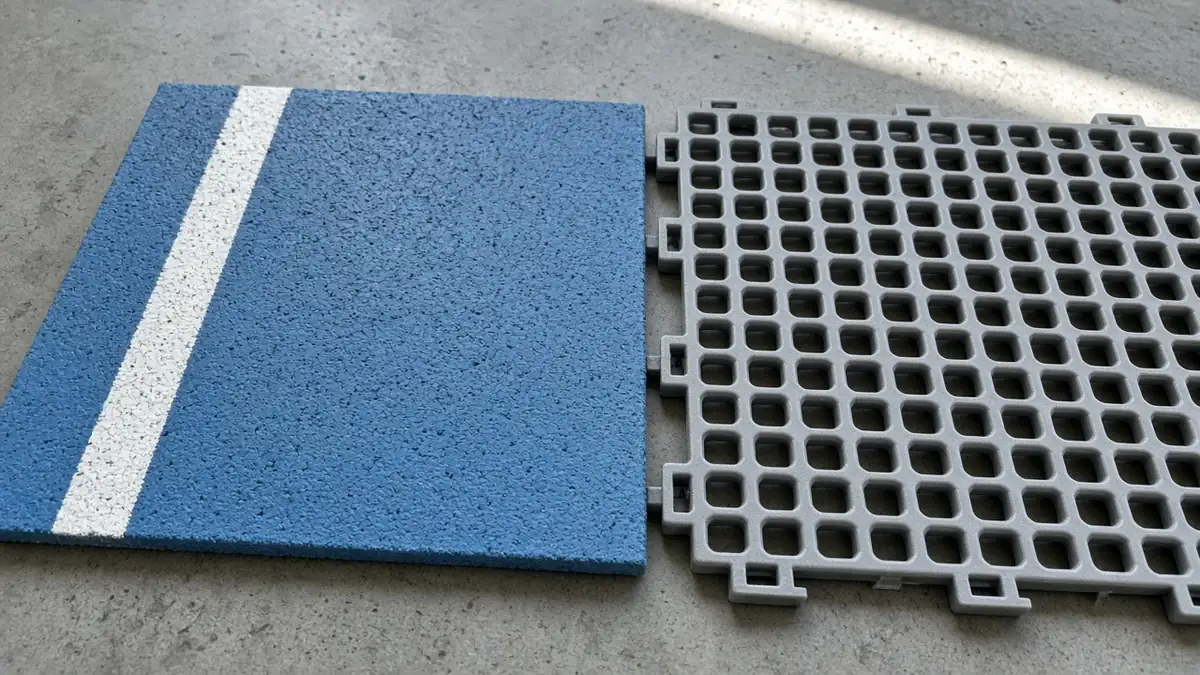
Whatever the base, the coating wears first, which is where Angi’s $3,000 to $15,000 resurfacing range comes in. Our take: in freeze-thaw country, spend on the base. The coating is the part you’ll redo anyway.
How much does it cost to convert a tennis court to pickleball?
Angi prices a remodel or tennis-court conversion at $10,000 to $25,000, well below a new build, because the slab, fencing and often the lighting already exist. The work is mostly new lines, coating and nets.
Space isn’t the problem. A standard 60 × 120 ft tennis enclosure holds four 30 × 60 ft pickleball playing surfaces, the minimum in Rule 3.A.3. Keeping the tennis net for a single center court? Strap the middle down to 34 inches; our pickleball net height guide shows how to measure it.
How much does an indoor pickleball court cost?
It depends almost entirely on whether the building already exists. In an existing gym, a court is mostly lines and a portable net. Building new is a construction project with a court inside it.
Eden Prairie, Minnesota, showed the gap in 2023: the Star Tribune reported the city weighing an outdoor renovation with six pickleball courts for under $2 million against an indoor pickleball building, also with six pickleball courts plus two tennis courts, at about $14 million. That’s roughly seven times the cost for the same number of pickleball courts.
What cities paid for pickleball courts in 2026
Public bids are a useful reality check because they’re competitive and published. They also tend to carry costs a homeowner rarely pays, such as engineering, contingencies and accessibility work, so read them as a ceiling, not a target. Per-court figures are our division.
| City (date) | Project | Amount | Per court |
|---|---|---|---|
| Lincoln Park, MI (Aug 2026) | 4 courts on an existing slab: coating, striping, fencing, nets and posts | $57,980 | About $14,500 |
| Royal, IA (Aug 2026 estimate) | 2 courts; estimate rose from $30,000 | About $50,000 | About $25,000 |
| Iola, KS (Aug 2026) | 1 new court | $46,700 | $46,700 |
| Altus, OK (Apr 2026) | 3 new courts plus six windscreens | $153,728 | About $51,200 |
| Pittsfield, IL (Mar 2026) | 2 courts at Lowry Park | $185,115 | About $92,560 |
| Gilroy, CA (Jun 2026) | 6 courts at Las Animas Veterans Park, incl. 5% contingency | $1,288,000 | About $214,700 |
Sources: City of Lincoln Park council record (Aug 24, 2026); Civic IQ’s record of Altus’s council approval; council votes reported by Citizen Portal (Iola, Pittsfield); the Hartley Sentinel (Royal); and the Gilroy Dispatch, which reported that all six Gilroy bids came in above the city’s own estimate.
That’s roughly a 15-to-1 spread. The cheapest row is the one that didn’t pour a new base, and its per-court figure sits in the same territory as Angi’s $10,000 to $25,000 conversion range.
The cheapest way to get a pickleball court
Use a slab you already have. A driveway, sport pad or old tennis court with painted or taped lines and a portable net skips the priciest line items: base, excavation and grading. Just check the space, since Rule 3.A.3 still asks for 30 × 60 ft of playing surface.
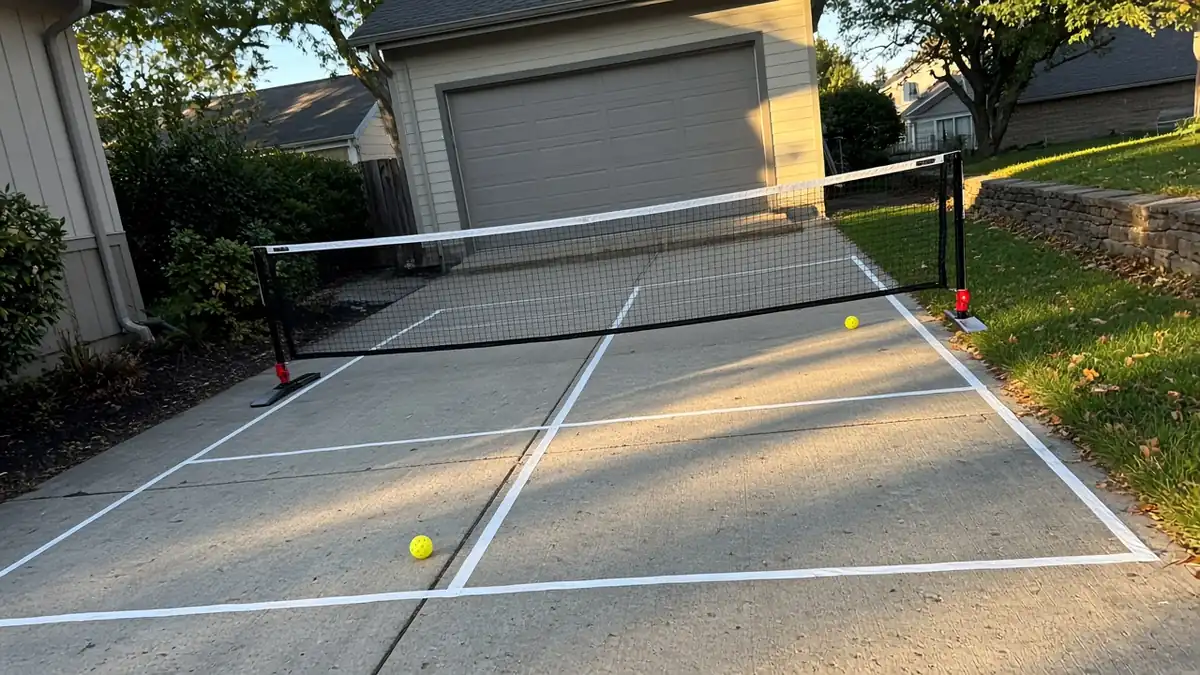
Get site prep quoted separately, too. Angi’s updated land-clearing range of $1,000 to $4,000 can land on a wooded or sloped lot before any concrete arrives.
It’s also how the sport began: a family improvising on a backyard surface, as our history of when pickleball was invented explains.
Costs after the build
Resurfacing is the big recurring bill: Angi’s updated guide puts it at $3,000 to $15,000. Cracks, patching and net replacement come in smaller pieces between resurfacings. Price the base first, the lights second, and most of the rest is rounding.
FAQ
Do I need a permit to build a pickleball court?
Often, yes, especially if the job involves grading, a new slab, tall fencing or lighting. Angi’s October 2026 guide puts permit costs at $200 to $2,000 depending on where you live. Call your local building department before you get quotes, and check HOA rules if you have one.
Can I build a pickleball court myself?
You can. Angi puts DIY materials at $7,000 to $20,000, and skipping its $5 to $15 per sq ft labor rate saves roughly $9,000 to $27,000 on a 30 × 60 ft surface, by our math. The hard part is a level, well-drained slab. Lines and a portable net on an existing pad are the realistic DIY job.

Ava Sinclair
Lead Analyst, ChessAva builds GameQuants' engine-evaluation and rating-system models and leads data-quality review across the desk.
More from More Sports
What Is the Best Pickleball Paddle? (2026 Buyer’s Guide)
The best pickleball paddle for most players in 2026 is the Bread & Butter Loco 2 Hybrid. Plus our picks…
How Long Is a Pickleball Court? (44 Feet, Explained)
A pickleball court is 44 feet long and 20 feet wide for singles and doubles, but you need a 60…
What’s the Difference Between Pickleball and Tennis?
The main difference between pickleball and tennis is scale: a 20 x 44 ft court, solid paddle, plastic ball, underhand…