What Size Soccer Ball for 7 Year Old? Size Guide

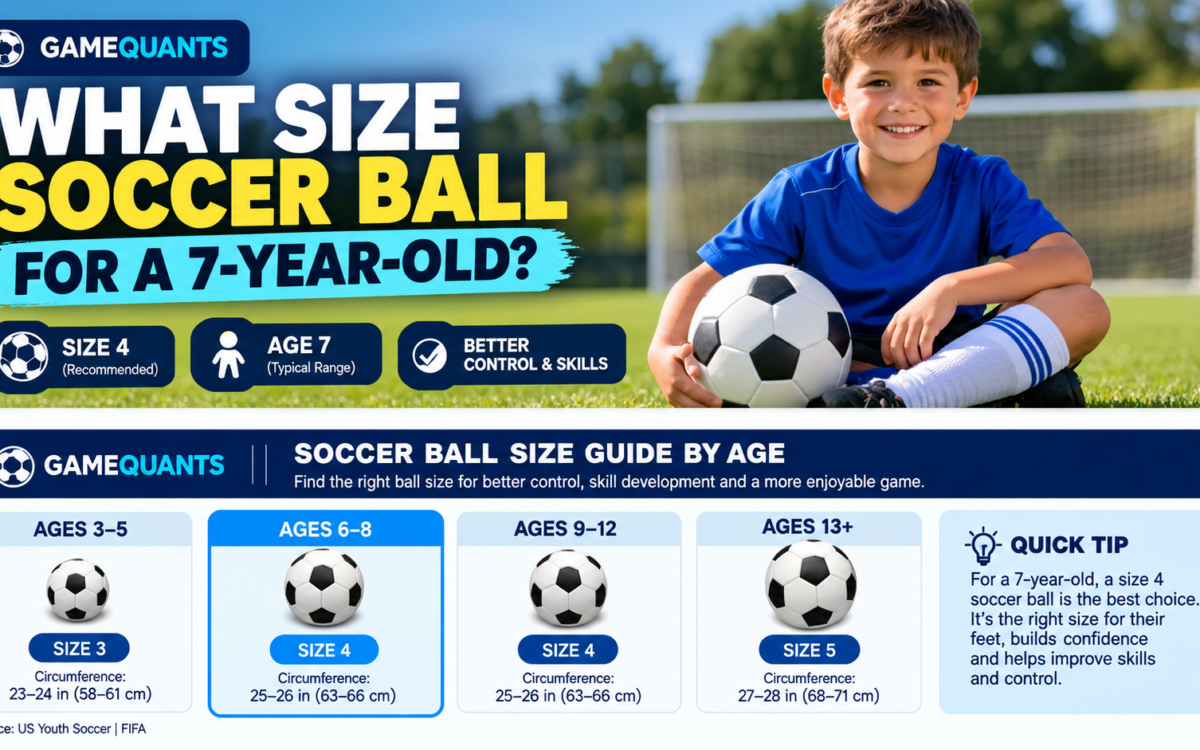
If you are wondering what size soccer ball for 7 year old players is right, choose a Size 3 soccer ball. It is the standard youth size for this age in major U.S. youth soccer guidance.
A Size 3 is smaller and lighter than balls used by older children, which makes passing, dribbling, and shooting easier for young players learning basic soccer skills.
What size soccer ball for 7 year old?
A 7-year-old should generally use a Size 3 soccer ball. U.S. Soccer’s Soccer at Schools guidance recommends Size 3 for ages 5–8, while AYSO specifies Size 3 for its Schoolyard Soccer, 6U, and 8U divisions.
Here is a quick comparison:
| Soccer ball size | Typical age | Circumference |
| Size 1 | Mini/training ball | 18–20 inches |
| Size 3 | 7 and younger / young youth | About 23–24 inches |
| Size 4 | 8–12, depending on organization | 25–26 inches |
| Size 5 | Older youth/adults | 27–28 inches |
Age ranges can differ slightly between organizations and manufacturers. Smaller Sizes 1 through 4 are produced for younger players or training, according to Wikipedia.
How big is a Size 3 ball?
A Size 3 soccer ball is roughly 23–24 inches (58.5–61 cm) in circumference according to Nike’s sizing chart.
AYSO permits a slightly broader specification for its younger divisions:
- Size: 3
- Circumference: 23–25 inches
- Weight: 10–12 ounces
These dimensions make the ball noticeably smaller and lighter than a Size 4 or Size 5.
That difference matters for a 7-year-old. A smaller ball is easier for young feet to control, making it more suitable for practicing touches, passes, shots, and dribbling.
Why 7-year-olds use Size 3
Size 3 matches the physical abilities of younger players better than a full-size soccer ball.
Adidas describes Size 3 as the junior-game size for players ages 7 and younger and notes that its smaller dimensions help children learn basic skills without dealing with a ball that is too large or heavy.
For beginners, that can help with:
- Keeping the ball close while dribbling
- Learning passing technique
- Controlling the ball with both feet
- Practicing shooting without an unnecessarily heavy ball
- Building confidence during small-sided games
Youth football has also adopted smaller teams, pitches, and goals to encourage skill development rather than rewarding physical strength, as reported by The Guardian. A Size 5 may look like the soccer balls used by professional players, but it is generally too large for a typical 7-year-old’s regular training and matches.
Size 3 vs Size 4
The main difference between Size 3 and Size 4 is circumference and intended player age.
A Size 3 measures approximately 23–24 inches around, while Size 4 measures about 25–26 inches. Nike recommends Size 3 for children under 8 and Size 4 for ages 8–12.
Adidas uses a similar cutoff, recommending Size 3 for ages 7 and younger and Size 4 for ages 8–11.
A child who is almost 8 may occasionally practice with a Size 4, particularly if a coach is preparing the team for its next age division. For normal play at age 7, however, Size 3 remains the safer default unless the child’s league specifies otherwise.
Check your league before buying
Youth soccer organizations do not always use identical age brackets, so check the rules for your child’s team before buying a match or practice ball.
Nike specifically notes that youth league standards can differ by location and recommends confirming the required ball size with the relevant league or association.
This is especially useful if your child is moving between age divisions. A league may organize players by birth year or division rather than simply using their current age.
For general backyard practice, recreational play, or a first soccer ball for a 7-year-old, Size 3 is the straightforward choice.
What to look for in a Size 3 ball
Once you have the size right, focus on a ball suited to how the child will use it.
For regular practice, choose a durable training ball that can handle repeated use on the playing surface. Make sure Size 3 is printed on the ball or packaging rather than relying on appearance alone. U.S. Soccer’s Learning Center notes that ball size is generally printed on the ball.
The ball should also hold air properly and maintain its shape. If it becomes significantly deflated or misshapen, it will behave differently when a child passes, dribbles, or shoots it.
FAQs
Is Size 3 or 4 better for a 7-year-old?
Size 3 is generally better for a 7-year-old. U.S. Soccer guidance includes Size 3 for ages 5–8, and AYSO uses Size 3 through its 8U division.
Can a 7-year-old use a Size 4 soccer ball?
Yes, but Size 3 is usually the appropriate choice for regular play at age 7. Adidas notes that an experienced 7-year-old can move to Size 4, although its general recommendation remains Size 3 for ages 7 and younger.
What age starts using a Size 4 soccer ball?
Around age 8 is a common starting point for Size 4. Nike recommends it for ages 8–12, while Adidas lists Size 4 for ages 8–11. League requirements should take priority.
What soccer ball size comes after Size 3?
Size 4 comes after Size 3. It is the intermediate youth size before players eventually progress to the full-size Size 5 ball.
Conclusion
For parents asking what size soccer ball for 7 year old players to buy, Size 3 is the best general choice. It fits common youth guidelines and gives young players an age-appropriate ball for practicing soccer skills.

Ethan Cole
Basketball & Rankings LeadEthan maintains the GameQuants Power Rankings model and covers lineup and shot-quality data in the NBA.
More from Soccer

What Is a Striker in Soccer? Role and Skills Explained
A striker in soccer is an attacking player whose main job is to score goals. Strikers usually play closest to…
When Is Soccer Season in High School? 2026–27 Guide
If you are wondering when is soccer season in high school, the answer depends on your state. High school soccer…
What Size Soccer Ball for 5 Year Old? Size Guide for Parents
If you’re wondering what size soccer ball for 5 year old players is right, choose a Size 3 soccer ball.…